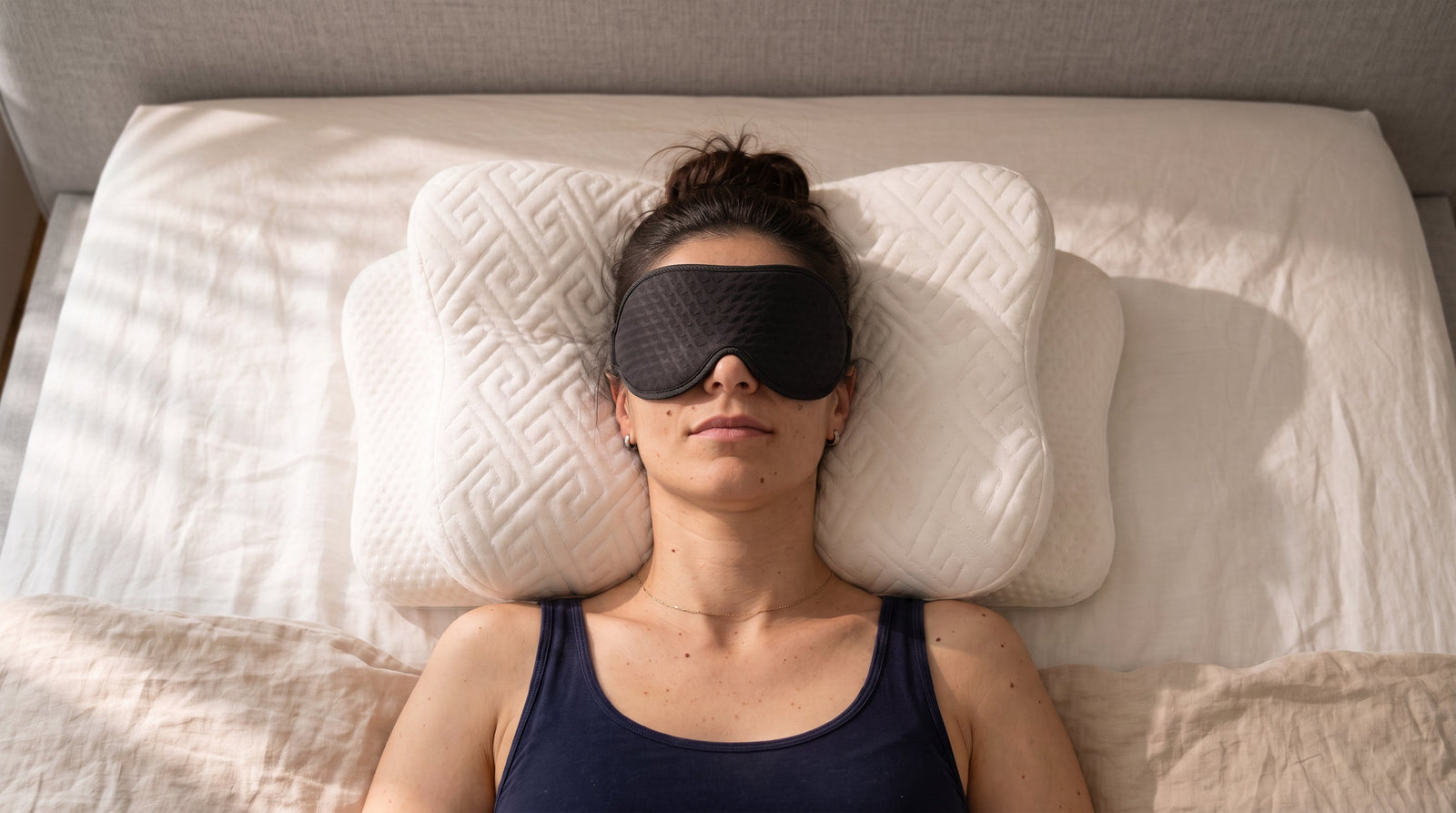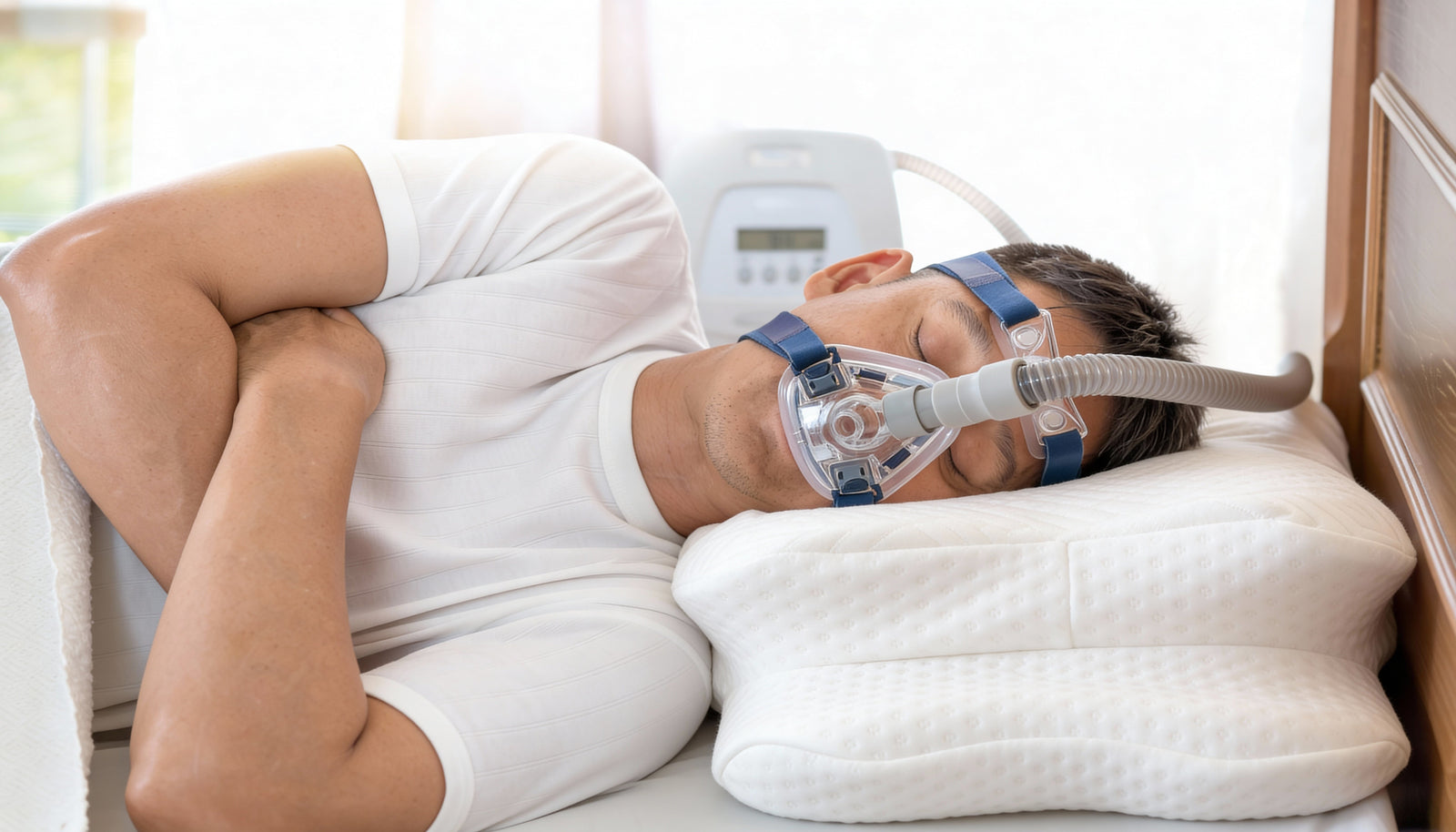


Are you lying on your side, listening to a podcast or an audio book - and suddenly the in-ear headphones press uncomfortably against your ear? Many side sleepers know this problem. It's not necessarily the headphones alone that are important: when lying on your side, your ear is between your head and the pillow. Additional in-ear headphones also need space there.
Podcasts, audio books, meditations, music or relaxing sounds are part of the evening routine for many people. As long as you lie on your back, small in-ear headphones are often hardly noticeable. However, if you turn on your side, this can change within a few seconds: your ear is pressed against the pillow, the headphones shift or their outer surface presses on sensitive areas of the auricle.
Why is this happening? What can you do about it? And what role does it play? Pillow with a cutout for the ear? In this guide we explain the connections in more detail - including important tips for safe listening.
Why do in-ear headphones press when you sleep on your side?
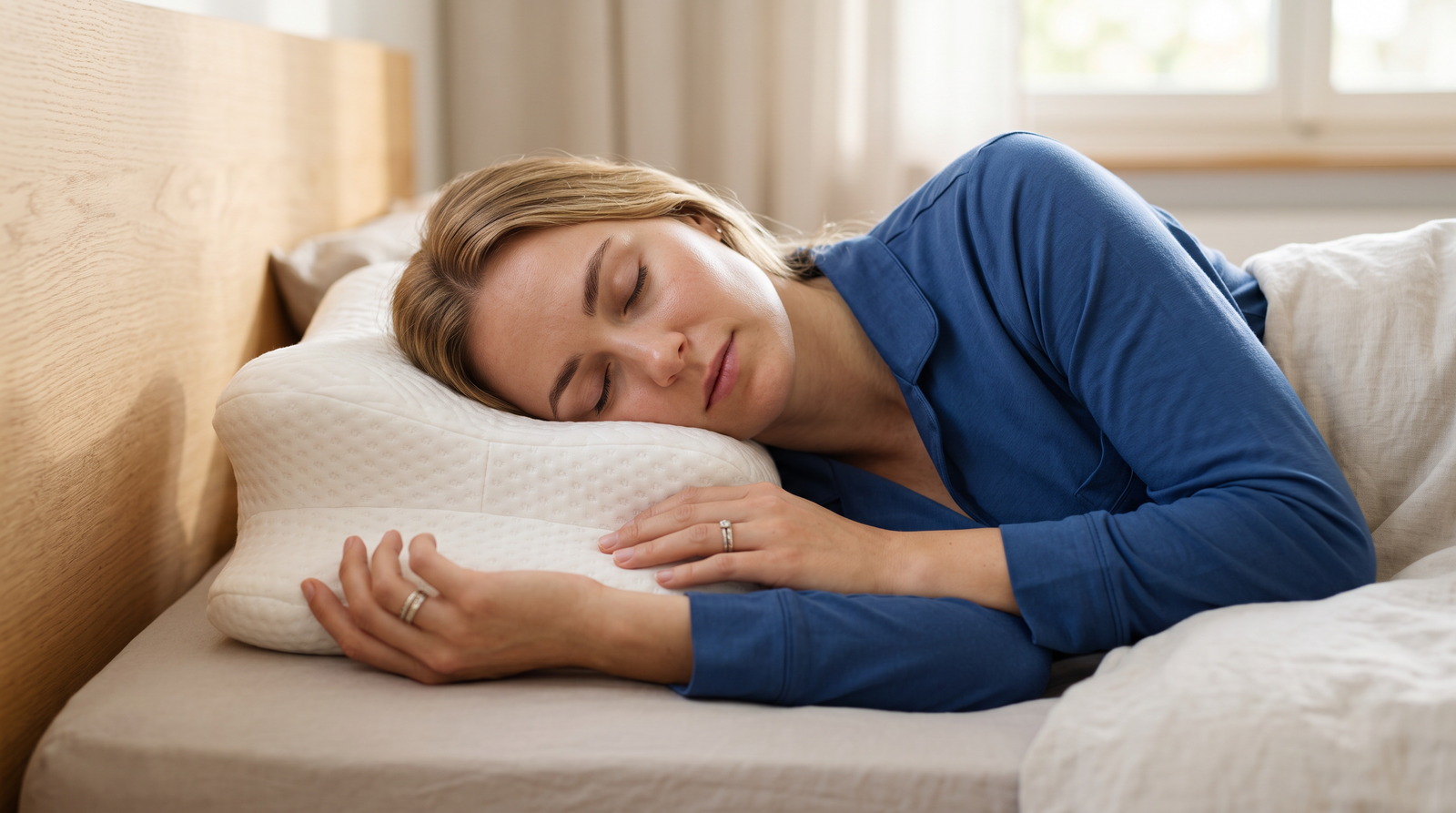
When lying on your side, part of the weight of your head rests on the pillow via the contact surface. The auricle can get caught between the head, the in-ear headphones and the pillow. Depending on the shape of the headphones, the anatomy of the ear, the hardness of the pillow and the sleeping position, this can cause unpleasant local pressure. A cutout in the cushion creates additional space around the ear and can reduce this mechanical contact.
Why can in-ear headphones press when lying on your side?
The visible auricle consists largely of elastic cartilage, which is covered by a relatively thin layer of skin and soft tissue. This is exactly why individual areas of the ear can react sensitively to sustained pressure.
When sleeping on your side, the auricle rests on the pillow. If there are also in-ear headphones in your ear, their housing can get between the ear and the cushion. As a result, the load may be concentrated in a smaller area.
Medical literature basically shows that sustained mechanical pressure on the auricle may be relevant. This connection is particularly well documented in the rare inflammatory skin and cartilage disease chondrodermatitis nodularis helicis, which often occurs on the preferred sleeping side. This does not mean that habitual side sleeping or wearing in-ears automatically causes this condition. However, it shows that the auricle may be sensitive to sustained local pressure.[1][2]
- Feeling of pressure on the auricle
- Uncomfortable contact between the headphone case and the cushion
- In-ear headphones slipping
- changing sleeping positions more frequently
- Sensitivity to pressure when lying on the same side for long periods of time
The obvious solution: more space for the ear
Anyone who feels pressure on their ears when sleeping on their side will understandably first think of smaller or particularly flat sleep headphones. That can help – but it doesn’t always solve the fundamental space problem.
Even very compact in-ear headphones are still located between the ear and the pillow.
Another approach is therefore to to change not just the headphones, but the contact surface of the cushion. A specifically positioned ear recess creates an area in which the auricle can rest without being completely pressed against a closed foam surface.
Less direct contact between the ear or in-ear headphones and the cushion can create more space for the auricle - especially when lying on your side.
EULIN® CLOUD FLOWER MF1: Ear recess meets ergonomic cushion concept
This is exactly the approach taken EULIN® CLOUD FLOWER MF1. There is an approximately five centimeter cutout in the performance memory foam that creates additional space in the ear area.
This opening originally serves to reduce the direct pressure on the ear region when sleeping on the side. At the same time, this creates a practical side effect: In-ear headphones also have more space when lying on their side.
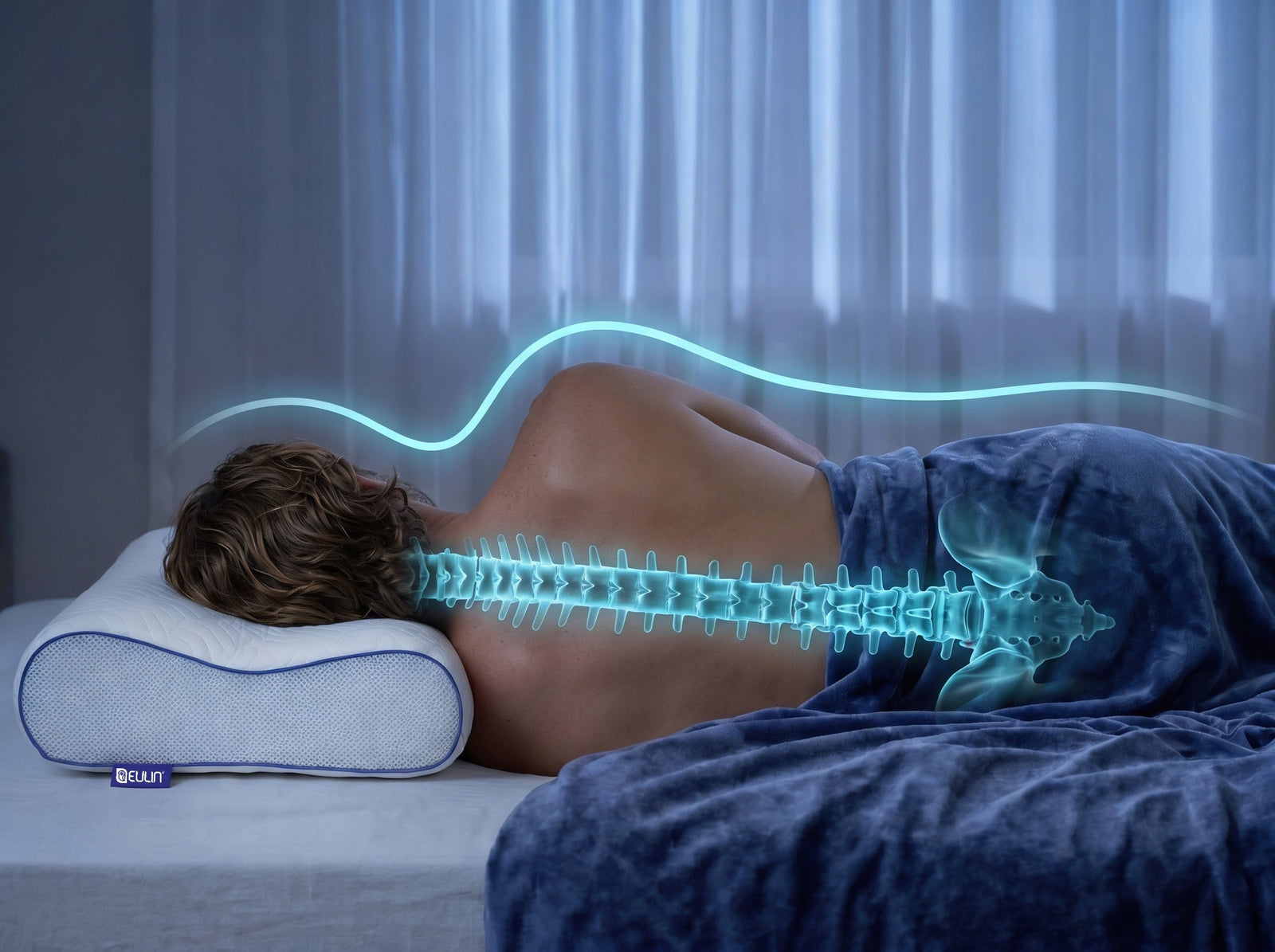
Height adjustment is particularly relevant for side sleepers: the pillow consists of three layers and, according to current product information from EULIN®, can be configured between approximately 8 and 12 centimeters. This means the height can be better adapted to individual body proportions and sleeping habits.
Not just for podcasts: When an ear cutout can be practical
The combination of side positioning and in-ear headphones occurs in many everyday situations. Extra space around the ear can be particularly interesting when in bed:
would like to hear another episode or end the evening with a story.
Uses the sounds of rain, the sound of the sea or other quiet soundscapes.
Listen to guided meditations or breathing exercises through headphones.
Watch a film or series without disturbing other people in the room.
Use quiet music or other audio content to relax.
Fall asleep with in-ear headphones: It's the volume that matters
Comfort is only one side of the issue. Anyone who uses headphones regularly for a long time - especially when falling asleep - should also use them Hearing protection think.
The main factors that determine the risk of noise-related hearing damage are: Sound level and duration of exposure. The louder an audio signal is, the shorter it can be safely heard. Repeated or prolonged exposure to high levels of sound can cause permanent damage to hearing.[3][4]
The World Health Organization recommends personal audio, among other things:
- to keep the volume as low as possible,
- As a practical guide, use no more than about 60% of the maximum device volume,
- to stay below 80 dB on average when measurable sound exposure is possible,
- to limit the duration of loud noise exposure,
- Use well-fitting or noise-reducing headphones so that ambient noise does not have to be constantly drowned out at higher volumes.
Source: World Health Organization, Safe Listening.[3]
Especially if you fall asleep while listening to a podcast or audio book and the content continues afterwards, the listening time can increase unnoticed. A sleep timer function is therefore a simple way to automatically stop playback after a set time.
Can audio content help you sleep?
Many people use quiet audio to mask ambient noise or to make their evening routine more pleasant. However, one should make a scientific distinction: Not every podcast, every noise or every headphone automatically improves sleep.
For example, a randomized study with shift workers examined special noise-masking sleep earbuds. The results indicated improvements in subjective sleep quality, daytime sleepiness and tension. However, the authors expressly emphasized that larger studies are necessary and that the results cannot easily be transferred to all population groups.[5]
In practice, this means: If a quiet podcast, an audio book or quiet noises help you relax, this can be part of your personal evening routine. However, medical promises about generally better sleep quality cannot be derived from this.
What should side sleepers pay attention to when it comes to pillows and in-ears?
If you often sleep on your side and use headphones, it's worth looking at several factors at the same time.
The further the housing protrudes from the ear, the more likely it is to come into direct contact with the pillow. Particularly flat models can therefore be more comfortable - but the individual ear shape remains crucial.
A cutout in the cushion can reduce direct contact around the ear while creating space for the headphones.
For side sleepers, the pillow must take into account the distance between the head and the mattress. Body type, shoulder width, mattress and personal sleeping position therefore influence which height is comfortable.
Comfort on the ear does not protect against excessive sound exposure. The volume should therefore remain low regardless of the pillow used.
Feelings of pressure or pain are a signal to change position or take out the headphones. Persistent or recurring ear pain should be investigated medically.
Flat sleep headphones or pillows with an ear cutout?
Both approaches pursue a similar goal, but attack at different points.
| approach | Principle | Possible advantage |
|---|---|---|
| Flat in-ear | Reduces the height of the headphones | Less protruding housing |
| Cushion with ear cutout | Creates space in the pillow | Less direct contact area around the ear |
| Combination | Flat in-ear plus additional space | May be particularly comfortable for some side sleepers |
This article addresses mechanical comfort while lying down and is not a substitute for a medical examination. If ear pain persists, is very severe, occurs repeatedly or if there is also hearing loss, discharge, significant redness, swelling, fever, dizziness or other symptoms, you should have the cause clarified by a doctor or ENT specialist.
Conclusion: When it comes to side sleeping, sometimes a small detail makes the difference
Anyone who likes to lie on their side and listen to a podcast, an audio book or music on in-ear headphones may be all too familiar with the space problem around the ear.
Instead of exclusively looking for smaller and smaller headphones, it's worth taking a look at the cushion. A targeted cutout creates additional space for the auricle and can reduce direct contact between cushion, ear and in-ear headphones.
With the EULIN® WOLKENBLUME MF1, this ear recess is integrated into an ergonomic, height-adjustable memory foam cushion. The pillow thus combines a classic ergonomic concept for side and back sleepers with a detail that can be particularly interesting for podcast, audio book and in-ear fans.
Regardless of the pillow, it is important that anyone who listens to headphones for a long time should keep the volume low and give their hearing regular rest.
Discover the EULIN® CLOUD FLOWER MF1 with integrated ear recess.
To the CLOUD FLOWER MF1Frequently asked questions
Can you sleep on your side with in-ear headphones?
In principle it is possible. Depending on the headphones, ear shape and pillow, the housing of the in-ear can be pressed against the auricle when lying on your side. A particularly flat pair of headphones or a pillow with an ear cutout can create more space. Regardless of the position, a low volume is important for hearing.
Why does my ear hurt when I sleep on my side?
A possible cause is local mechanical pressure: When lying on your side, the auricle is between your head and the pillow. In-ear headphones can further concentrate this contact. However, recurring or persistent ear pain can have many causes and should be clarified medically.
What's the point of a pillow with an ear hole?
A recess creates space for the auricle and reduces the direct contact area between the ear and the cushion. This can be particularly pleasant for side sleepers. If there are in-ear headphones in your ear, there is also more space available.
Is the ear recess on the WOLKENBLUME MF1 only intended for headphones?
No. The cutout was designed to provide additional space in the auricle area when sleeping on the side. The fact that this creates more space for in-ear headphones is an additional practical advantage.
How big is the ear recess on the EULIN® WOLKENBLUME MF1?
The cutout in the performance memory foam measures approximately five centimeters and is located in the area where the ear rests when sleeping on the side.
What volume is recommended for in-ear headphones?
The WHO recommends using personal audio devices as quietly as possible. As a simple guide, she mentions a maximum of around 60% of the maximum device volume; When displaying sound exposure, the average should remain below 80 dB if possible. The combination of volume and listening time is always crucial.
Are podcasts or audio books healthy for falling asleep?
This cannot be answered in general terms. Some people find audio content relaxing. Studies on noise-masking earbuds sometimes show positive effects on subjective sleep parameters, but the data cannot generally be applied to all people and all audio content. Anyone who uses audio to fall asleep should pay particular attention to low volume and a limited playback time.
Scientific sources & further information
[1] Nielsen LJ, et al. Therapeutic Options of Chondrodermatitis Nodularis Helicis. Plastic Surgery International. 2016. The review describes, among other things, the connection between preferred sleeping side, chronic pressure on the ear and CNH.
PubMed Central/NIH
[2] Hohman MH, et al. Chondrodermatitis Nodularis Helicis. StatPearls/National Center for Biotechnology Information. The medical review describes the anatomical sensitivity of the ear cartilage to pressure.
NCBI Bookshelf
[3] World Health Organization. Deafness and hearing loss: Safe listening. WHO. Recommendations regarding volume, sound exposure, and safe use of personal audio devices.
World Health Organization
[4] Portnuff CDF. Reducing the risk of music-induced hearing loss from overuse of portable listening devices. Current Opinion in Otolaryngology & Head and Neck Surgery. 2016.
PubMed
[5] Duggan NM, et al. The Effect of Noise-Masking Earbuds (SleepBuds) on Reported Sleep Quality and Sleepiness in Health Care Shift Workers. Journal of Clinical Sleep Medicine / Study published in 2022. The study reports possible improvements in individual subjective sleep parameters and at the same time points out the need for larger studies.
PubMed